Dry Needling
What is Dry Needling?
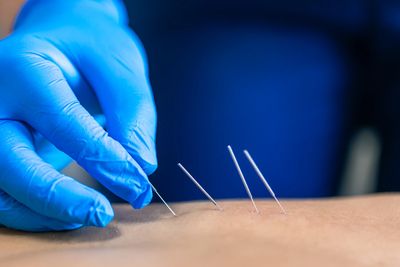
Dry needling involves carefully inserted, ultra-fine needles into specific muscle trigger points which can help reduce pain, improve blood flow, and accelerate recovery. By stimulating the affected areas, dry needling aims to release tension and restore normal muscle function, making it a popular choice for those dealing with chronic discomfort or injuries
What is the difference between Acupuncture and Dry Needling?
Dry needling is based on locating trigger points within muscles. Acupuncture uses a system of traditionally located points which are considered to be connected.
What are the benefits?
- ain Relief. Dry needling treatment targets trigger points to reduce chronic and acute pain.
- Better Mobility. Tight muscle knots can restrict movement, so releasing them can help.
- Faster Recovery. Speeds up the healing process after injuries or intense physical activities.
- Addresses Muscle Tension. Dry needling relaxes overworked muscles and decreases stiffness.
- Better Performance. This technique is perfect for athletes and active individuals to recover faster and prevent injuries.
- Minimally-Invasive. It is a natural, minimally-invasive alternative to medications or surgeries with less possible side effects.
What is a dry needling treatment like?
After a detailed history is taken, the practitioner will examine the patient for trigger points, a.k.a "muscle knots." After being positioned lying down comfortably, a thin needle will be inserted. When in contacts the muscle, it may cause a local twitch response (LTR)—a brief involuntary muscle contraction. This is an unforgettable, strange, yet somehow deeplys satisfying experience! This mechanically disrupts the dysfunctional muscle fibers, releases tension in the taut band, and helps "reset" the trigger point.It improves blood flow to the area, reducing hypoxia (low oxygen) and ischemia that contribute to pain and inflammation. This flushes out inflammatory chemicals and restores normal pH levels in the muscle tissue.